Showing posts with label public spaces for kids. Show all posts

Thursday, July 31, 2014

Traveling to Boston: What Makes Boston a Great Place for Families with Children

My youngest son and I spent a week exploring Boston this summer.  We fell in love with Boston's open spaces, pedestrian orientation, and cultural amenities. This post is about some of our favorite places in Boston and why we found Boston to be such a great place for families with children. Next up, a post about why Boston is still losing families with children to the suburbs.

Our favorite family-friendly amenities in Boston:

1. Boston's extensive network of high quality parks. Boston has parks for everyone, big and small, with 97% of the population living within a ten-minute walk of a public park (compared to 43% in Austin), and 3.5 playgrounds per 10,000 residents (vs 1.3 in Austin). We visited a different park everyday. One of our favorite parks, or rather series of parks, was the Rose Kennedy Greenway, a mile-and-a-half ribbon of new parks that were built on top of a major highway after it was relocated underground. The parks were filled with family-friendly amenities, from water features to carousels and wide lawns.
Map of Boston's public parks
from the Trust for Public Land
ParkScore index website
The Canal Fountain in the North End Park of Boston
Part of the Rose Kennedy Greenway
The Armenian Heritage Park in Boston
Part of the Rose Kennedy Greenway

alley in Boston's North End
An alley in Boston's North End
2. Pedestrian-orientation. Boston is one of the most pedestrian-friendly U.S. cities we have visited as family, with its wide sidewalks, well-striped crosswalks, and walking access to a diverse array of urban amenities. Indeed, Boston ranks third on the Walk Score index of walkable cities. Whenever we arrived at a mid-street crosswalk, the cars would actually stop to allow us to cross! (This is a novelty in Austin, where you place your life at risk if you cross a mid-street crosswalk.). While my son would have protested, I could have easily spent the whole week just walking around the city.

3. Public squares and alleys. I was equally impressed with Boston's rich array of lively public open spaces beyond its parks, including the city's numerous public squares, pedestrian-friendly alleys, and historic walking trails. The city government is embarking on a new 2015-2021 Open Space Plan, which will identify opportunities for further enhancing the city's public space inventory.


public square in Boston's North End
Public square in Boston's North End


Park and public gathering space in Central Boston


public art in Boston, the Alchemist
Jaume Plensa's "The Alchemist"
MIT Campus
4. Cultural Amenities:

Boston is teeming with cultural amenities with its public art and historic architecture, outdoor concerts, and museums galore, all within walking distance or an easy ride on public transit. In a week, we could not come even close to visiting all of the museums on our wish list.  My son's favorites: Boston Children's Museum and Museum of Science (where, to my chagrin, one of the most popular interactive exhibits was a machine that you could make fart). My favorites: Old State House, Boston Freedom Trail, and the MIT Museum (in Cambridge across the river). We never made it to the Museum of Fine Arts, the Boston Fire Museum, the Institute of Contemporary Art, the Isabella Gardner Museum, the USS Constitution Museum, and many of the other museums in Boston.
Boston Children's Museum

Boston Children's Museum indoor climbing sculpture
Indoor climbing sculpture
Boston Children's Museum
Boston Science Museum
The toot machine


Pin It

Sunday, October 20, 2013

Promoting the Walkability of Austin and Ability of Kids to Play in the Streets

Neighborhood grassroots campaign in Austin to get city to install a stop sign
Neighborhood grassroots campaign in Austin to get the City to install a stop sign


In talking to Austin parents, many express frustration with how unsafe it is for their kids to walk to school, play in the streets, or access nearby amenities on foot. By no means is Austin unique in this regard. As a writer in the Atlantic Monthly lamented earlier this year: 
This is the point we have come to in much of the developed world: The freedom for a child to walk out the door and skip rope or play catch is something that has to be scheduled, organized, and officially permitted.

And for parents trying to get basic safety improvements installed, the process can be maddening, quickly leading to roadblocks and dead-ends.

Luckily, there are three great new developments that will help make our streets safer in Austin:

First, the Austin City Council has formed a new Pedestrian Advisory Council to help guide the City as it looks to improve walkability in the city. The Council, which is modeled on the City's Bicycle Advisory Council, meets for the first time this week on October 22nd, 5:30, at City Hall.

Second, Austin has a new grassroots coalition, WalkAustin, committed to transforming Austin into a pedestrian-friendly city.  Earlier this year, the coalition put on a walkability summit to launch a citywide conversation about promoting walking in the city.  As I understand it, the idea for creating the Pedestrian Advisory Council grew out of the summit.

Third, the National Association of City Transportation Officials (NACTO) recently released a set of new urban street design guidelines. The guidelines include a range of cutting-edge design guidelines for making streets safer and more inviting for people of all ages, as well as opportunities to carve out more active play spaces. As the NACTO website states:
Growing urban populations will demand that their streets serve not only as corridors for the conveyance of people, goods, and services, but as front yards, parks, playgrounds, and public spaces. Streets must accommodate an ever-expanding set of needs. They must be safe, sustainable, resilient, multi-modal, and economically beneficial, all while accommodating traffic.
The NACTO guidelines and Austin's new citizen-led efforts to increase walkability come at a perfect time for Austin, with its high pedestrian fatality rate and low walkability score. The national site, Walk Score, ranks Austin in the bottom half of large US cities on walkability--based on how easy it is to safely walk to basic household amenities such as grocery stores and restaurants. Both Dallas and Houston have higher rankings. 

Some of the new policies and programs I would love to see Austin adopt to improve walkability--and  the ability of families to walk and play in their neighborhoods--include:
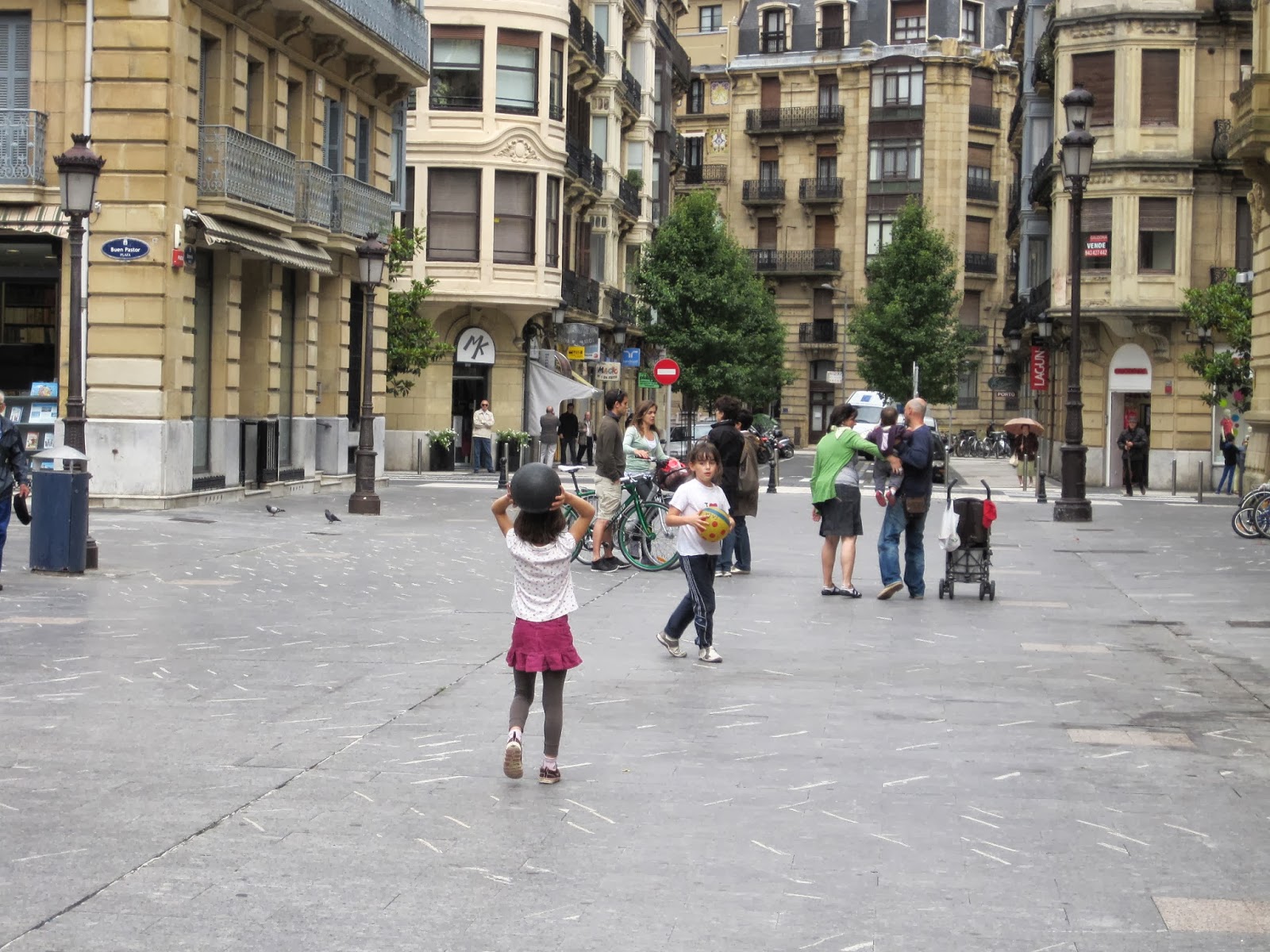
  • A pilot project to retrofit 10 neighborhood streets across the city into shared streets, also known as living streets or homes zones. Through their design, shared streets place an emphasis on pedestrian scale and traffic calming, permitting children to play safety in front of their homes. The shared street concept, which originated as "woonerfs" in the Netherlands, has been adopted by cities throughout the world. NACTO's new design guidelines includes a section on shared streets. The City of San Francisco also has its own design guidelines for shared streets. Chicago is in the process of designing its first shared street. Santa Monica finished its first shared street transformation last year in a residential neighborhood where residents were concerned about crime and quality of life, in an effort to bring about a stronger sense of neighborhood and to promote walking and cycling. Aukland, Australia is putting in place the shared street concept throughout the city. Great Britain has funded the retrofitting of dozens of shared streets under its "Home Zone" program.  We came across many shared streets in our travels to Europe last summer (see pictures below).
  • Redesign the City of Austin's Pedestrian Program to more closely resemble the City's Bicycle Program, which has been able to cut across city silos and dramatically expand the city's cycling facilities through strong leadership and integration of planners and engineers. The Pedestrian Program is currently focused primarily on repairing and adding sidewalks to comply with the Americans Disabilities Act. In addition to addressing the critical gaps in sidewalk accessibility, the Program should be looking at other opportunities to increase pedestrian-oriented environments. Similar to the role of the Bicycle Program director, a Pedestrian Program director could serve as "walkability" advocate, to cut through city bureuacracy, proactively seek out opportunities to improve walkability, and build collaborations across departments.
  • In this same vein, the City needs a pedestrian master plan, building upon the city's sidewalk master plan, looking at a fuller range of opportunities to not only address accessibility but to also promote walkability in the City.
    shared street in San Sebastian Spain
    Shared street in San Sebastian, Spain

shared street in San Sebastian Spain
Shared street in San Sebastian, Spain


Pin It

Wednesday, September 11, 2013

Carving Out Urban Spaces for Parklets, POPOS, Pocket Parks, and More

When it comes to creating greater public access to parks and public spaces, there are lots of innovative things happening around the United States and world. Mexico City is transforming spaces under highways into public playgrounds and outdoor cafes, Pacoima, California, is transforming the lots of foreclosed homes into pocket parks, and Los Angeles has launched a "Streets for People" initiative to transform under-utilized areas of street scape into high-quality public spaces. The city is also working to create 50 new pocket parks in underserved communities.
Yerba Buena Gardens playground--built on the roof of the Moscone Center
Yerba Buena Gardens playground--built on the roof of the Moscone Center in San Francisco
On our family trip to San Francisco last month, we had lots of time to explore the city's wonderful parks, including the lovely Yerba Buena Gardens playground built on a rooftop (see above). (San Francisco, by the way, ranks second in the country on per capita spending for parks and recreation.)  I also had one morning to myself--a glorious 3 hours away from my kids--to observe first hand many other ways in which San Francisco has carved out dozens of new public spaces in a dense urban environment. This particular tour of mine focused on the city's parklets, POPOS, and alleys. More on alleys in a later post.

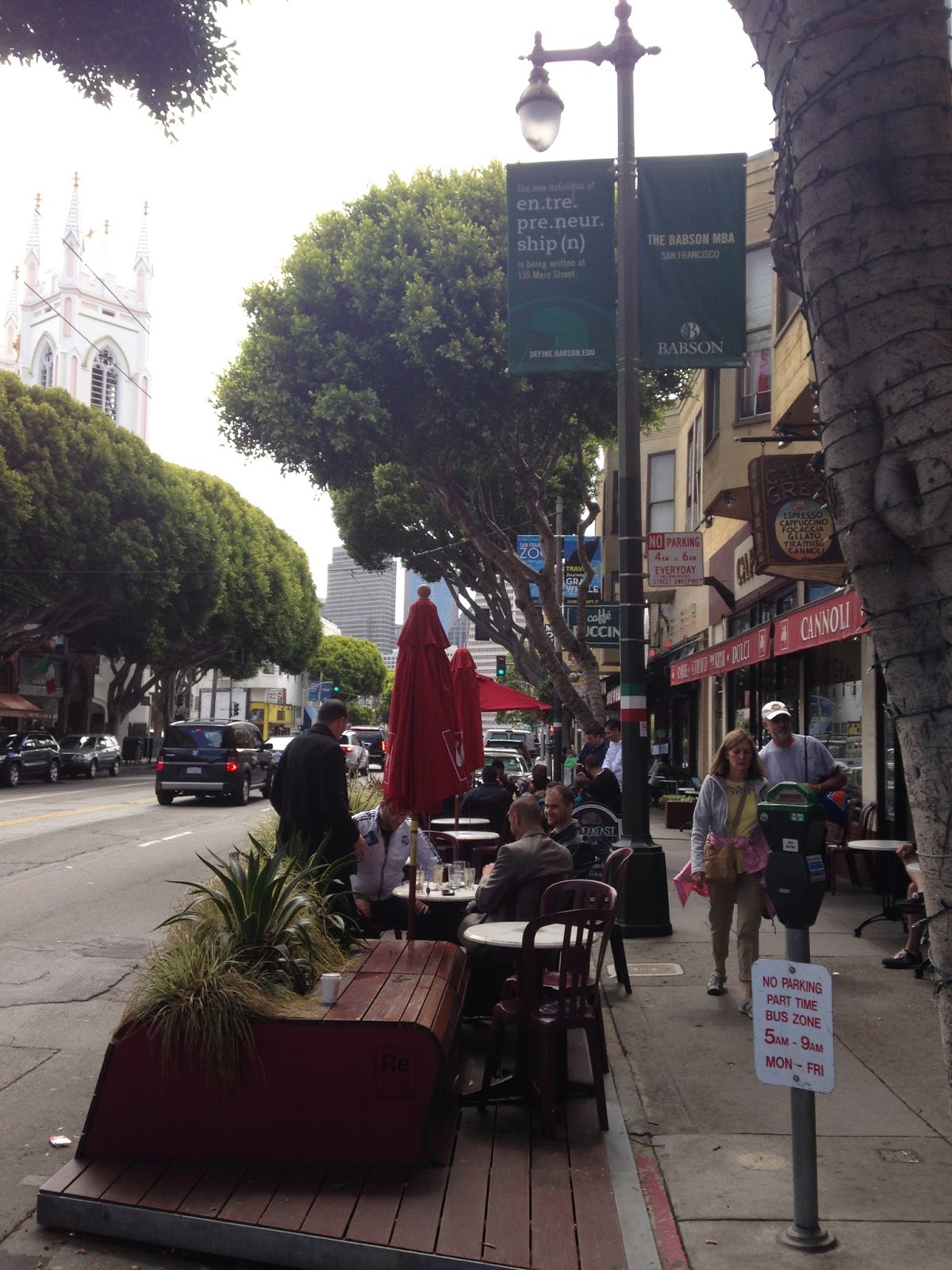
Parklets: San Francisco is the national leader when it comes to creating parklets--parking spaces that have been transformed into activated public spaces. Through the city's "Pavement to Parks" program, 38 parking areas have been converted into parklets since 2010, with the costs typically covered by the surrounding businesses. I visited about a dozen of these parklets during my walking tour, using a map created by SF Great Streets. None of the parklets I saw were being used as play spaces and did not seem targeted towards children at all. The primary uses for the parklets appeared to be extended outdoor dining and seating areas for adjoining businesses, along the lines of Austin's only parklet--the successful Royal Blue Grocery parklet on Congress Avenue. It seems like the parklet model is something that could also be used to carve out micro play spaces for children, along the lines of the pocket parks we saw in Barcelona last summer placed along major boulevards (see below), or the "urban" sandboxes I blogged about here.

parklet in San Francisco
Parklet in San Francisco
parklet in San Francisco Little Italy
Parklet in San Francisco--Little Italy
Pocket park for children in Barcelona
Pocket Park for Kids in Barcelona
POPOS: San Francisco has 68 POPOS, which stands for "Privately-Owned Public Open Spaces." I had never heard of this acronym before visiting the city. The open spaces range from parks and plazas to terraces, pedestrian walkways, and urban gardens--all of which are open to the public even through they are privately-owned and privately-managed. Many of the POPOS in San Francisco exist because of public open space requirements for new developments in the City's downtown plan. A local group has created a wonderful inventory of these spaces to raise public awareness about them, and there is even an interactive website (and soon-to-be app) with information about the POPOS. Here are a couple of the POPOS that I came across in San Francisco:
A Privately-Owned Public Open Space, or POPOS, at 555 Mission in San Francisco
POPOS pedestrian arcade and dining area at Embarcadero Center in San Francisco


Pin It

Sunday, April 21, 2013

20 ft Wide Alley Activation Update II

Movability Austin pop-up breakfast in the alley for downtown commuters
20 ft Wide--Austin's downtown alley activation project--wrapped up today. I have written about this exciting project in other blog posts here. Hundreds of people of all ages visited the alley at Brazos/Congress/9th over the past five days to see the alley transformed into a vibrant public space, including: an art gallery, a Pecha Kucha stage, an outdoor dining spot; a gathering space for meetings, a contemplative place to read the paper, and and an artistic playground for children. The alley became a treasured public place, a place to visit and linger in, to rest and play in, while taking in the alley's sights and sounds. Here are pictures from some of the Friday and Saturday alley events. I'll post pics from the Wednesday and Thursday events in a follow-up post.

Dinner in downtown Austin alley
Friday night dinner in the alley
Alley Kids Day: filled with family-friendly activities including . . . 
 
Alley Kids Day in 20 ft Wide Austin downtown alley activation project
Origami with Creative Action

Alley Kids Day in downtown Austin alley
. . .  and balloon hats

Alley Kids Day in downtown Austin alley
. . . and jugglers

. . . and hula hoopers
. . . and story time

Badger dog writing workshop in downtown Austin alley
. . . and a young author's writing workshop

. . . and acro yoga . . . and more!!!


Pin It

Monday, April 15, 2013

20 ft Wide Has Arrived: Austin, Alley, Activation, Art

20 ft Wide -- Austin's Downtown Alley Activation pilot project -- has begun!  The first phase of the art installation went up over the weekend with more to come. Lots of fun activities are scheduled in Austin Downtown Alley #111 this week, between Congress and Brazos at 9th Street.  The opening party is this Wednesday, April 17th from 7-10pm, following by Pecha Kucha night on Thursday evening, a pop-up commuter breakfast on Friday morning, and Alley Kids Family Day on Saturday--when the alley will be transformed into an artistic playground for kids and their families. Very exciting! More pictures to come. The full line-up of free alley events is available on the Art Alliance Austin website.

Austin downtown alley activation project 20 ft Wide
20 ft Wide: Austin downtown alley #111
photo courtesy of Dan Cheetham/fyoog.com

Austin downtown alley activation project 20 ft Wide
20 ft Wide: Austin downtown alley #111
photo courtesy of Dan Cheetham/fyoog.com

Pin It

Monday, April 1, 2013

20Ft Wide: Downtown Alley Activation Comes to Austin

I have written a of couple posts here about my love for alleys and the potential to transform these spaces into vibrant public places for families.  Last fall, the City of Austin's Downtown Commission (which I sit on) set up a workgroup to explore how to make this happen. This has led to the upcoming launch of 20Ft Wide, Austin's first downtown alley activation project (in recent times at least). Yay! What a thrill to see this project unfold, with a tremendous consortium of public and private partners.

20Ft Wide will temporarily activate a downtown alley along Congress Avenue as a public space over the course of five days in April. The project will involve an art installation in the upper levels of the alleyway, along with a series of artist programs and interactive activities for families, to draw people into the alley and to engage them with the alley space. “20ft Wide” is named after the 20 feet that serves as the standard width for many of Austin’s downtown alleys. On Saturday, April 20th, from 10am-3pm, the alley will be transformed into an artistic playground for children, with a writer's workshop, origami, musical performances, jugglers, and more.

The 20Ft Wide project is already generating lots of great buzz in the media, including these stories from YNN and KUT public radio. A detailed list of 20Ft Wide events will be posted soon on Art Alliance Austin's website.  Stay tuned for updates. 


20ft Wide alley activation project in downtown Austin

Pin It

Tuesday, March 5, 2013

Sandboxes in Cities

I am have been thinking about sandboxes in cities. Summer is still a few months away, but the weather here in Austin has been gorgeous, and, whenever possible, my family wants to be outdoors. There are very few things that will entertain my two sons -- for hours -- more than sand, dirt, and rocks.

Other cities have decided that, if you live in a city and cannot make it to the beach, bring the beach to you! I love the temporary and permanent installations of sand boxes in the cities featured below. Sandboxes are a fabulous way to draw families into the downtown urban core and a fun way to transform streets that are otherwise dead on the weekends into places of play.


Sandbox Project in Canada for children downtown
The Sandbox Project, Ottawa, Canada
Epoch Times, June 14, 2012
temporary sandbox in New York City Summer streets project
New York City, Summer Streets
© Nellies 78, Flikr, available under a Creative Commons Attribution/Noncommercial License
 
Imagination Playground sandbox in NYC
New York City, Imagination Playground

Paris Plage giant sandbox
Paris Plage
 © Cedric Cousseau, Flikr, available under a Creative Commons Attribution/Noncommercial/No Derivative Works License

sandbox for kids in summer streets in New York City
Summer Streets, New York City
© nycstreets, Flikr, available under a Creative Commons Attribution/Noncommercial License

temporary sandbox downtown
© akseabird, Flikr, available under a Creative Commons Attribution/Noncommercial License 
Pin It

Friday, October 12, 2012

Great Parks: Examples from Paris

Market studies have established that when families with children are deciding where to live, one of their top priorities is access to quality parks. But when it comes to providing this access, Austin has a long ways to go: Only 47% of the city's population lives within walking distance to a park, and the city is even struggling with maintaining its existing parks. In a recent survey, Austin families cited the lack of child-friendly open space as one of their top concerns about the City and its ability to support the needs of families and children.

Over the next decade, to attract and retain families with children in the city, Austin needs to tackle two challenges with its parks system: access and quality. The City needs to figure out how to join the ranks of cities like Chicago, Seattle, Denver, and Minneapolis in ensuring that the bulk of its population has walking access to a park, and, at the same time, the City needs ensure that its parks are high quality and attractive to children and persons of all ages.

One of the greatest park systems my family has ever come across in our travels is in Paris. The Project for Public Places even ranked 4 of Paris's parks amongst the top 24 in the world. This past summer my family, including our 2-year-old nephew, had the opportunity to visit several of Paris's marvelous and magical parks. Indeed, it seemed that every 1/2 mile or so in our travels throughout the City we would come across a fabulous, engaging, one-of-a-kind park. Here are some pictures from our trip:


Jardin des Tuileries
Jardin des Tuileries, Paris

Jardin des Tuileries
Jardin des Tuileries, Paris


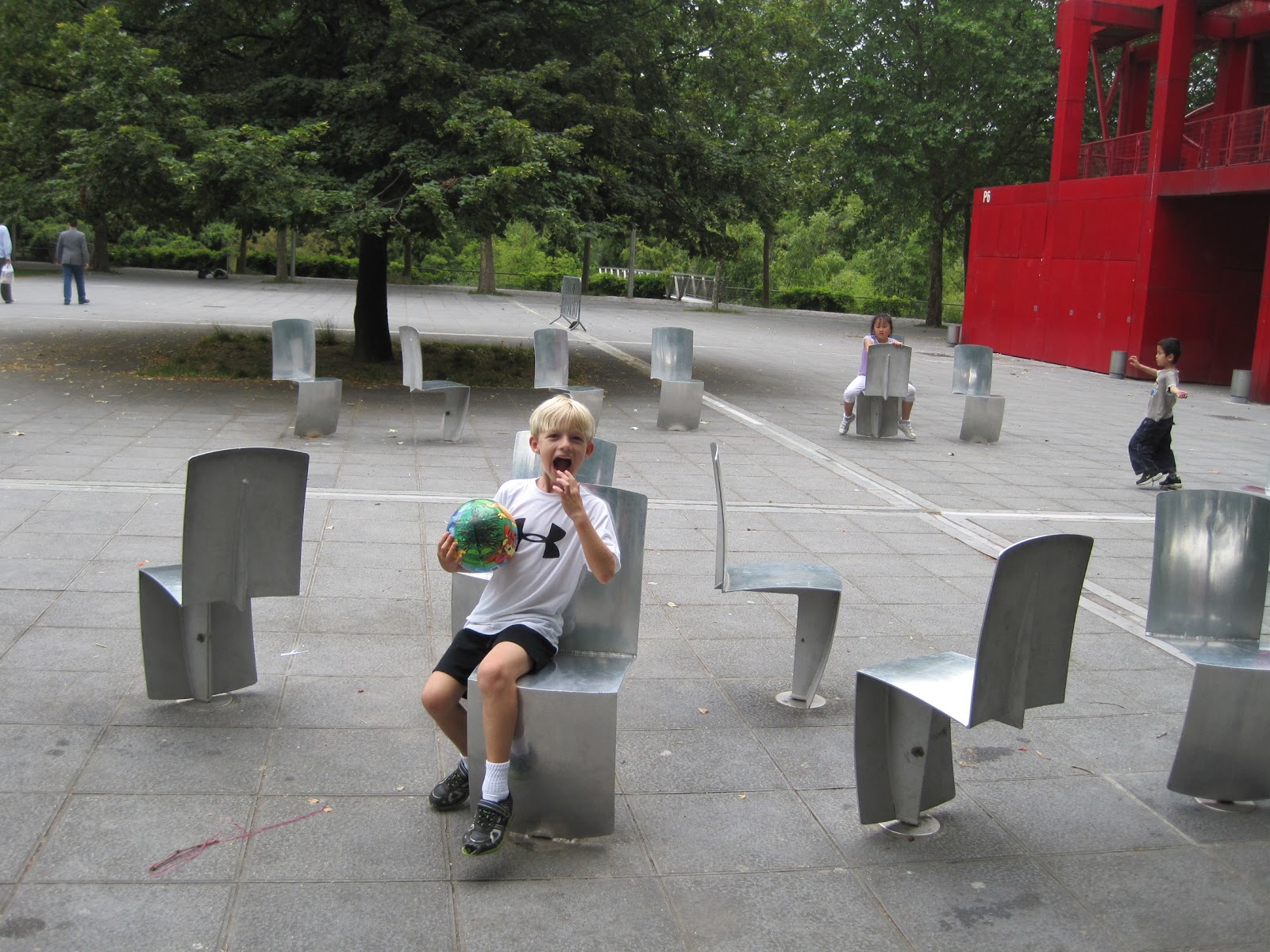
Parc de la Villette
Parc de la Villette

Parc de la Villette
Parc de la Villette

Parc de la Villette
Parc de la Villette
Jardin d'Acclimation

Jardin d'Acclimation

Jardin d'Acclamation
Jardin d'Acclimation


Place des Vosges
Place des Vosges

Parc de la Villette
Parc de la Villette


Pin It

Tuesday, October 9, 2012

The Biggest and Best Opportunity for Spectacular Public Space in Downtown Austin

Austin has an incredible opportunity to create a series of spectacular public spaces downtown, along a 1.5 mile span of Waller Creek. These spaces have the potential to become amongst the best public spaces in the country.  The 28-acre area along the creek includes two public parks and many other open spaces.

The Waller Creek Conservancy is in the midst of a design competition for transforming this section of Austin into a vibrant, livable area that also creates a healthy ecosystem for the creek. The 4 finalists from the design competition were recently announced, and the winning design will be selected next week.  The designs issued by the finalists include lots of very cool and inspiring concepts--for people of all ages to be excited about exploring.  Excerpts are available at the Conservancy's website. These are the kinds of ideas that make me wish I were an architect, except that I can't draw....

Turenscape + Lake | Flato Architects
Van Valkenburgh Associates, Inc. and Thomas Partners
CMG and Public Architecture

CMG and Public Architecture


Pin It